
Health Canada Approves Quillivant XR® Chewable for ADHD Treatment
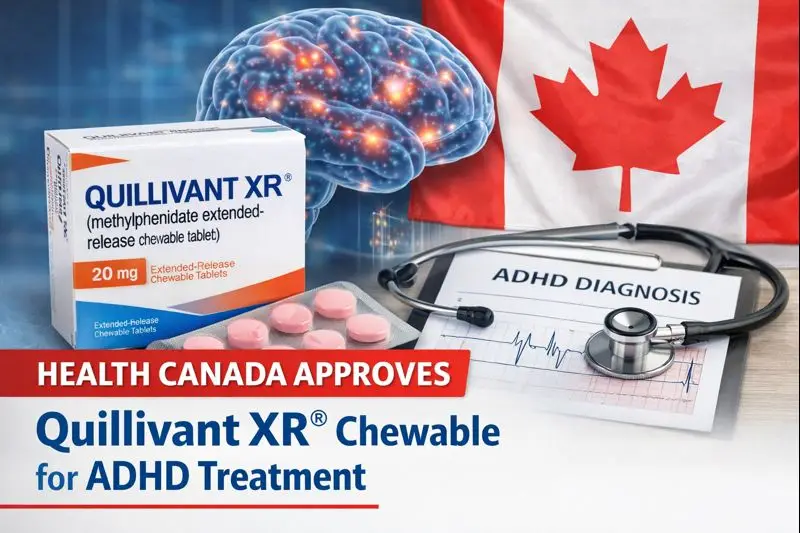
Health Canada Approval of Quillivant XR for ADHD
Health Canada has approved Quillivant XR (methylphenidate extended release) chewable formulation for the treatment of attention deficit hyperactivity disorder (ADHD) in pediatric and adult populations. This approval expands therapeutic options for patients who experience difficulty swallowing traditional solid oral dosage forms, addressing an important unmet clinical need.
Quillivant XR is a central nervous system (CNS) stimulant containing methylphenidate, a well-established first-line pharmacological treatment for ADHD. The chewable and extended-release formulation offers once-daily dosing, improving treatment adherence and symptom control throughout the day.
What Is Attention Deficit Hyperactivity Disorder (ADHD)?
Attention Deficit Hyperactivity Disorder (ADHD) is a chronic neurodevelopmental disorder characterized by persistent patterns of inattention, hyperactivity, and impulsivity that interfere with daily functioning or development.
ADHD affects approximately 8–10% of children and adolescents worldwide and often persists into adulthood. Importantly, ADHD is not caused by poor parenting, lack of discipline, or low intelligence level. It is a neurobiological condition associated with differences in brain structure, function, and neurotransmitter regulation.
Core Symptoms of ADHD
ADHD symptoms vary by individual and developmental stage but generally fall into three domains:
Inattention
- Difficulty sustaining attention on tasks or activities
- Easily distracted by external stimuli
- Trouble following instructions or completing tasks
Hyperactivity
- Excessive fidgeting or restlessness
- Difficulty remaining seated
- Feeling persistently “on the go”
Impulsivity
- Interrupting others or conversations
- Acting without considering consequences
- Difficulty waiting for one’s turn
Types of ADHD
Clinically, ADHD is classified into three subtypes:
- Predominantly Inattentive Type
- Symptoms mainly involve inattention
- Formerly referred to as ADD
- Predominantly Hyperactive-Impulsive Type
- Symptoms mainly involve hyperactivity and impulsivity
- Combined Type
- Includes symptoms of inattention, hyperactivity, and impulsivity
Understanding subtype classification is essential for treatment selection and regulatory labeling.
Causes and Risk Factors of ADHD
Although the exact etiology of ADHD remains under investigation, research indicates several contributing factors:
- Genetic predisposition: ADHD frequently runs in families
- Brain structure and function: Alterations in the prefrontal cortex and dopamine pathways
- Environmental factors: Prenatal exposure to smoking, toxins, or low birth weight
Mechanism of Action of Quillivant XR (Methylphenidate)
Quillivant XR contains methylphenidate hydrochloride, a CNS stimulant that improves ADHD symptoms by modulating neurotransmitter activity in the brain.
Key Neurotransmitters Involved
Methylphenidate, the active ingredient in Quillivant XR, works by increasing the levels of certain neurotransmitters in the brain, specifically:
Dopamine
- Regulates motivation, reward, and attention
- Methylphenidate blocks dopamine reuptake, increasing synaptic availability
Norepinephrine
- Involved in alertness, impulse control, and focus
- Reuptake inhibition enhances executive functioning
Pharmacological Mechanism
The mechanism of action of Quillivant XR includes:
- Binding to Dopamine and Norepinephrine Transporters: Methylphenidate binds to the dopamine and norepinephrine transporters in the presynaptic neuron, blocking the reuptake of these neurotransmitters.
- Increased Neurotransmitter Release: By blocking reuptake, methylphenidate increases the release of dopamine and norepinephrine from the presynaptic neuron into the synaptic cleft.
- Enhanced Neurotransmission: The increased levels of dopamine and norepinephrine in the synaptic cleft enhance neurotransmission, leading to improved focus, attention, and impulse control.
- Modulation of Brain Regions: Methylphenidate affects various brain regions, including the prefrontal cortex, basal ganglia, and cerebellum, which are involved in attention, impulse control, and motor function.
Methylphenidate primarily affects the prefrontal cortex, basal ganglia, and cerebellum, which are critical for cognitive and motor regulation.
Extended-Release Formulation Advantage
Quillivant XR is designed as an extended-release formulation, providing:
- Gradual drug release over the day
- Stable plasma concentrations
- Reduced need for multiple daily doses
- Improved adherence, especially in pediatric populations
This formulation is particularly beneficial for school-age children and working adults requiring consistent symptom control.
Clinical and Non-Clinical Considerations
Clinical Evidence
Stimulant medications containing methylphenidate are among the most extensively studied treatments for ADHD. Meta-analyses published in peer-reviewed journals, including The Lancet, demonstrate that:
- Methylphenidate-based therapies are highly effective in children and adolescents
- Amphetamine-based therapies may show higher efficacy in adults
- Extended-release formulations improve tolerability and adherence
Non-Clinical & Safety Considerations
- Use during pregnancy requires careful risk-benefit assessment
- Alcohol consumption is not recommended, as it may increase cardiovascular and CNS risks
- Long-term stimulant use should be monitored for dependence and misuse risk
Non-pharmacological interventions such as behavioral therapy, lifestyle modification, and cognitive training may complement pharmacological treatment.
Regulatory Significance of Health Canada Approval
Health Canada’s approval of Quillivant XR chewable formulation reflects:
- Demonstrated quality, safety, and efficacy
- Compliance with Canadian regulatory standards
- Recognition of patient-centric dosage form innovation
This approval aligns with global regulatory trends emphasizing accessibility, adherence, and real-world patient needs.
Conclusion
The approval of Quillivant XR (methylphenidate extended-release chewable) by Health Canada represents an important advancement in ADHD treatment options. By combining a proven active ingredient with a patient-friendly formulation, this product enhances therapeutic flexibility for both pediatric and adult populations.
From a regulatory affairs and clinical development perspective, this approval underscores the importance of formulation innovation, lifecycle management, and patient-centric drug development strategies.
References
- Mayo Clinic. Adult attention-deficit/hyperactivity disorder (ADHD): Symptoms and causes. 2023. Published January 25, 2023. Available at: https://www.mayoclinic.org/diseases-conditions/adult-adhd/symptoms-causes/syc-20350878.
- KYE Pharma. Health Canada approves Quillivant XR® for ADHD. Available at: https://www.kyepharma.com/press/health-canada-approves-quillivant-r-er-extended-release-oral-suspension-and-chewable-tablets-for-the-treatment-of-adhd.
- American Psychiatric Association. What is ADHD? Available at:https://www.psychiatry.org/patients-families/adhd/what-is-adhd.
- Tris Pharma. QuilliChew ER® product information. Available at: https://www.trisadhd.com/quillichew-er/.
- DailyMed. Quillivant XR® (methylphenidate hydrochloride) prescribing information. Available at: https://dailymed.nlm.nih.gov/dailymed/drugInfo.cfm?setid=c2dc2109-44a6-4797-b04e-18761dd9d45a.