How to Build a Winning Regulatory Strategy for Your First IND
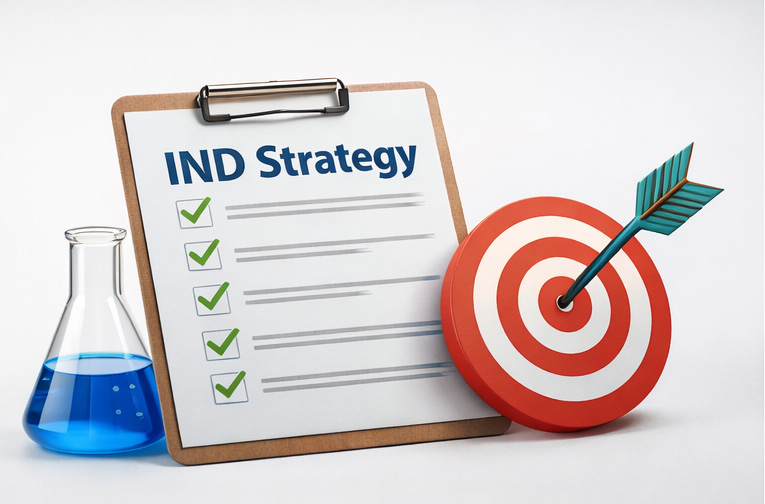
A Complete Guide for Biotech Startups
Introduction
For biotech startups, the Investigational New Drug (IND) application represents one of the most critical milestones in the drug development journey. It is the moment when a company formally requests authorization from the U.S. Food and Drug Administration (FDA) to begin testing a new drug in humans.
A strong IND submission is far more than a collection of scientific reports. It is a carefully designed regulatory strategy that demonstrates the scientific rationale, safety profile, and development plan for the investigational product. Companies that approach the IND as merely a documentation exercise often face delays, regulatory questions, or even clinical holds. In contrast, organizations that develop a well-structured regulatory strategy early in development significantly increase their chances of a smooth review process.
This article explains how to design an effective regulatory strategy for your first IND and how biotech teams can align scientific development with regulatory expectations.
Understanding the Purpose of an IND
Before developing a regulatory strategy, it is essential to understand what regulators are evaluating during the IND review process.
The FDA reviews an IND to ensure that:
• The investigational drug appears reasonably safe for initial human exposure
• The clinical trial protocol protects study participants
• The sponsor has sufficient manufacturing controls
• The scientific rationale supports further development
The IND submission provides regulators with the information they need to assess whether the benefits of conducting a clinical trial outweigh the potential risks. A strong regulatory strategy ensures that the evidence supporting these conclusions is presented clearly and convincingly.
When Should Regulatory Strategy Begin?
One of the most common mistakes biotech startups make is delaying regulatory planning until shortly before submission. In reality, regulatory strategy should begin early in preclinical development.
Early regulatory planning allows teams to:
• Design studies that meet regulatory expectations
• Avoid unnecessary experiments
• Align clinical and nonclinical programs
• Reduce the risk of regulatory delays
Early engagement with regulatory experts can significantly accelerate development timelines.
Core Components of a Strong IND Strategy
An effective IND strategy integrates several critical development components.
- Nonclinical Development Strategy
Nonclinical studies provide the safety data needed to support initial human exposure.
Key studies typically include:
• Pharmacology studies demonstrating mechanism of action
• Toxicology studies evaluating potential safety risks
• Pharmacokinetic studies describing drug behavior in the body
A strong regulatory strategy ensures that these studies are designed according to regulatory guidance and conducted under appropriate laboratory standards. Regulators must be confident that the nonclinical evidence adequately supports the proposed clinical trial. - Clinical Development Planning
The IND submission includes the protocol for the first-in-human clinical trial.
This protocol must demonstrate:
• Appropriate safety monitoring
• A rational dose escalation plan
• Clear study objectives
• Ethical protection of participants
A well-designed clinical protocol signals to regulators that the sponsor has carefully evaluated the risks and benefits of the proposed study. Clinical development planning should also consider long-term strategy. Early clinical trials should generate data that support future development phases. - Chemistry, Manufacturing, and Controls (CMC)
CMC information describes how the investigational drug is manufactured, tested, and controlled.
Regulators evaluate whether:
• The manufacturing process is reliable
• The drug product meets quality standards
• Analytical methods are appropriate
• Stability data support the proposed shelf life
For early-stage biotech companies, manufacturing readiness is often a major regulatory challenge. Establishing robust quality systems early helps prevent manufacturing-related delays.
The Importance of Pre-IND Meetings
One of the most valuable opportunities for sponsors is the Pre-IND meeting with the FDA.
This meeting allows sponsors to:
• Present their development plan
• Receive regulatory feedback
• Clarify expectations for IND submission
Preparing effectively for a Pre-IND meeting is essential.
Sponsors should develop:
• Clear questions for regulators
• A concise development overview
• Supporting data summaries
Constructive regulatory dialogue can significantly improve the quality of the IND submission.
Building the Regulatory Narrative
Regulatory submissions are not simply collections of technical documents. They must tell a coherent scientific story.
A strong IND narrative should explain:
• Why the drug is scientifically promising
• How the nonclinical data support human testing
• Why the proposed clinical trial is appropriate
Medical writers play a critical role in translating complex scientific information into clear regulatory communication. Effective regulatory writing ensures that reviewers can quickly understand the rationale for the development program.
Managing Regulatory Risks
Every development program carries risk. A proactive regulatory strategy identifies potential issues before submission.
Common regulatory risks include:
• Insufficient toxicology data
• Inadequate manufacturing controls
• Unclear clinical trial design
• Data inconsistencies across documents
Conducting internal gap analyses before submission helps identify weaknesses and allows teams to address them early.
Preparing for Regulatory Questions
Even well-prepared IND submissions may generate questions from regulators.
Sponsors should prepare in advance by:
• Reviewing potential safety concerns
• Preparing supporting analyses
• Establishing rapid response teams
Quick and well-structured responses demonstrate professionalism and scientific credibility.
The Role of Cross-Functional Collaboration
Successful IND submissions require collaboration across multiple disciplines.
Key contributors include:
• Regulatory affairs professionals
• Clinical development teams
• Nonclinical scientists
• CMC specialists
• Medical writers
Strong cross-functional coordination ensures consistency across all sections of the submission. Misalignment between scientific teams is one of the most common sources of regulatory questions.
Technology and the Future of Regulatory Strategy
Digital tools and artificial intelligence are beginning to transform regulatory development.
Emerging technologies support:
• Data integration across studies
• Automated document management
• Advanced safety signal analysis
• AI-assisted medical writing
While regulatory expertise remains essential, modern technology can significantly enhance the efficiency and quality of regulatory submissions.
Key Takeaways
Developing a strong regulatory strategy for an IND submission requires early planning, scientific rigor, and clear communication.
Sponsors should focus on:
• Aligning nonclinical and clinical development
• Ensuring manufacturing readiness
• Engaging regulators early through Pre-IND meetings
• Developing a clear regulatory narrative
• Managing potential risks proactively
Companies that invest in strategic regulatory planning significantly improve their chances of successful clinical development.
Conclusion
For biotech startups, the first IND submission represents a critical step in transforming scientific discovery into potential therapies for patients. A well-designed regulatory strategy ensures that the scientific evidence supporting the investigational drug is presented clearly, logically, and convincingly.
By integrating regulatory thinking early in development, biotech companies can navigate the complex path to clinical trials with greater confidence and efficiency. Ultimately, regulatory strategy is not just about meeting requirements. It is about guiding scientific innovation toward safe and effective therapies that can improve patients’ lives.