Regulatory Strategy vs Regulatory Operations: What Biotech Leaders Must Know
A Practical Guide to Building an Effective Regulatory Organization
Introduction
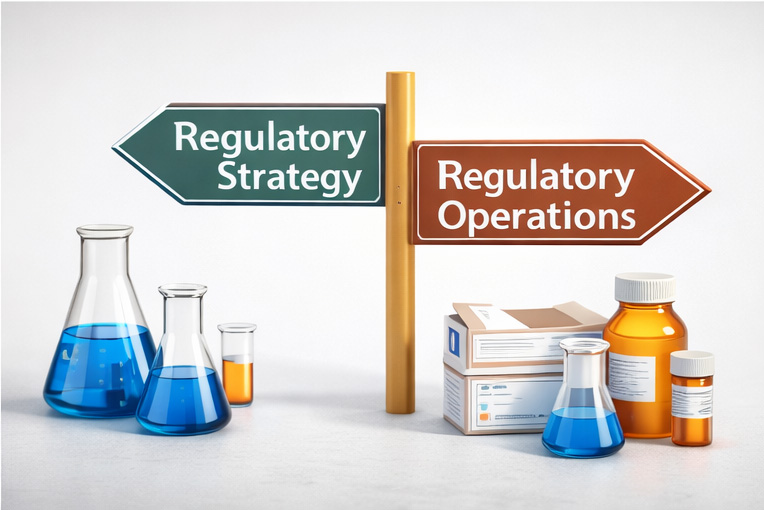
In biotechnology and pharmaceutical companies, regulatory affairs play a central role in bringing new therapies to market. Yet many organizations struggle to distinguish between two critical regulatory functions: regulatory strategy and regulatory operations. Although these areas are closely connected, they serve different purposes within a drug development program. Regulatory strategy focuses on long-term planning and decision-making, while regulatory operations focus on executing regulatory submissions and managing documents.
Understanding the difference between these functions is particularly important for biotech startups, where resources are limited, and teams often wear multiple hats. Companies that successfully separate strategic thinking from operational execution are better positioned to navigate regulatory requirements, accelerate development timelines, and avoid costly delays.
This article explains the difference between regulatory strategy and regulatory operations, why both are essential, and how biotech organizations can structure their regulatory teams effectively.
The Role of Regulatory Affairs in Drug Development
Regulatory affairs serve as the bridge between scientific innovation and regulatory approval. The primary goal of regulatory professionals is to ensure that drug development programs comply with health authority requirements while progressing efficiently toward approval. This involves coordinating complex scientific, clinical, and manufacturing information into regulatory submissions that demonstrate the safety, quality, and effectiveness of new therapies.
However, regulatory work involves two very different types of responsibilities:
- Strategic planning and regulatory decision-making
- Operational management of submissions and documentation
Both functions are critical, but they require different expertise and skill sets.
What Is Regulatory Strategy?
Regulatory strategy refers to the high-level planning and decision-making that guides a drug development program through the regulatory landscape.
Strategic regulatory professionals focus on questions such as:
- What is the optimal regulatory pathway for this therapy?
- Which regulatory designations should the company pursue?
- How should clinical trials be structured to support approval?
- What evidence will regulators require at each development stage?
In essence, regulatory strategy defines the roadmap for regulatory approval.
Strategic decisions influence:
- Clinical development plans
- Nonclinical study design
- Manufacturing requirements
- Regulatory submission timelines
These decisions must be made early in development and continually refined as new data emerge.
Key Responsibilities of Regulatory Strategy
Regulatory strategists typically perform several critical functions within biotech organizations.
Development Pathway Planning
Strategists identify the regulatory pathway that best supports the drug’s development.
This may involve selecting between different regulatory routes, such as:
- Traditional development pathways
- Accelerated approval programs
- Orphan drug pathways
Strategic planning ensures that development activities generate the data regulators will require.
Regulatory Agency Interactions
Regulatory strategists often lead communications with health authorities.
This includes:
- Pre-IND meetings
- End-of-Phase meetings
- Scientific advice meetings with regulatory agencies
Effective regulatory dialogue helps align development plans with agency expectations.
Risk Identification
Strategists identify potential regulatory risks early in development.
For example:
- Safety concerns
- Data gaps
- Manufacturing challenges
Recognizing these risks early allows companies to address them before they affect submission timelines.
What Is Regulatory Operations?
While regulatory strategy focuses on planning, regulatory operations focuses on execution. Regulatory operations teams manage the complex logistics involved in preparing and submitting regulatory documentation.
Their responsibilities include:
- Document management
- Submission formatting and publishing
- Electronic submission preparation
- Regulatory tracking and archiving
These operational activities ensure that regulatory submissions are organized, complete, and compliant with regulatory technical standards.
Key Responsibilities of Regulatory Operations
Submission Publishing
Regulatory submissions must follow strict electronic formatting standards such as eCTD (electronic Common Technical Document). Operations teams ensure that documents are properly structured and formatted for regulatory submission systems.
Document Control
Drug development programs generate thousands of documents.
Regulatory operations manage:
- Version control
- Document tracking
- Archiving of regulatory submissions
Maintaining organized documentation is critical for regulatory transparency.
Submission Management
Operations teams coordinate the preparation and delivery of regulatory submissions, including:
- IND applications
- NDA submissions
- Amendments and supplements
Submission timelines must be carefully managed to ensure regulatory deadlines are met.
Why the Difference Matters for Biotech Startups
In early-stage biotech companies, regulatory functions are often handled by a small team. Sometimes a single regulatory professional may be responsible for both strategic planning and operational tasks. While this approach may work in very small organizations, it can create challenges as development programs become more complex. Strategic thinking requires time, scientific analysis, and regulatory insight. If regulatory leaders are overwhelmed by operational tasks, they may not be able to focus on long-term planning. Separating strategic and operational responsibilities allows regulatory professionals to focus on their areas of expertise.
Skills Required for Regulatory Strategy
Strategic regulatory roles require a unique combination of scientific, regulatory, and analytical expertise.
Important skills include:
- Deep understanding of regulatory guidelines
- Knowledge of drug development pathways
- Ability to interpret complex scientific data
- Strategic decision-making
Strategic regulatory professionals must also be strong communicators because they frequently interact with regulators and senior leadership.
Skills Required for Regulatory Operations
Regulatory operations roles require different types of expertise.
Important skills include:
- Technical knowledge of submission systems
- Attention to detail
- Document management experience
- Project coordination
Operations teams must ensure that submissions meet strict formatting and technical requirements. Even minor technical errors can delay regulatory submissions.
Collaboration Between Strategy and Operations
Although regulatory strategy and operations serve different functions, they must work closely together. Strategic decisions determine what information must be included in submissions. Operations teams ensure that this information is organized and delivered correctly. Effective collaboration ensures that regulatory submissions are both scientifically strong and technically compliant.
Building a Strong Regulatory Organization
As biotech companies grow, they often expand their regulatory teams to include both strategic and operational roles.
A well-structured regulatory organization typically includes:
- Regulatory strategy leadership
- Regulatory operations specialists
- Medical writers
- Regulatory project managers
This structure allows companies to manage complex development programs efficiently.
The Role of Technology in Regulatory Operations
Modern regulatory operations rely heavily on digital technologies. Electronic submission systems help manage large document sets and ensure compliance with regulatory standards.
Technologies commonly used in regulatory operations include:
- eCTD publishing systems
- Document management platforms
- Regulatory tracking tools
These technologies improve efficiency and help organizations maintain regulatory compliance.
Conclusion
Regulatory strategy and regulatory operations are both essential components of successful drug development programs. Regulatory strategy defines the path toward approval by guiding scientific development and regulatory planning. Regulatory operations ensure that submissions are executed efficiently and meet technical requirements. Biotech organizations that clearly distinguish between these functions can build stronger regulatory teams and navigate the regulatory landscape more effectively. By combining strategic insight with operational excellence, companies can accelerate development timelines and bring innovative therapies to patients more efficiently.