The Complete Guide to IND Submissions for Biotech Startups

A Step-by-Step Roadmap to Starting Clinical Trials
Introduction
For biotechnology startups, reaching the point where a therapy can be tested in humans is a major milestone. The gateway to this stage is the Investigational New Drug (IND) application, which must be submitted to the U.S. Food and Drug Administration (FDA) before clinical trials can begin. The IND submission represents far more than a regulatory formality. It is the moment when a company presents the scientific evidence supporting its investigational therapy and demonstrates that it is safe enough to begin testing in human participants.
For emerging biotech companies, the IND process can seem complex and intimidating. It involves coordinating data from multiple scientific disciplines, preparing extensive documentation, and aligning development plans with regulatory expectations. However, when approached strategically, the IND submission becomes a powerful opportunity to demonstrate the strength of a development program and establish credibility with regulators.
This guide explains the IND submission process step by step and outlines how biotech startups can successfully navigate this critical regulatory milestone.
What Is an IND Application?
An Investigational New Drug (IND) application is a regulatory submission that allows a sponsor to begin clinical trials of a new drug in humans. The FDA reviews the IND to determine whether the proposed clinical study can proceed safely.
The review focuses on three primary areas:
- Nonclinical safety data
- Manufacturing quality and controls
- Clinical trial design
If the FDA does not place the study on clinical hold within 30 days, the sponsor may begin the clinical trial. This review period makes the IND one of the most time-sensitive submissions in drug development.
Why IND Submissions Are Critical for Startups
For biotech startups, the IND submission represents a pivotal transition from laboratory research to clinical development.
A successful IND can:
- Unlock major investment opportunities
- Enable partnerships with pharmaceutical companies
- Demonstrate the scientific validity of the technology
- Initiate clinical validation of the therapy
Investors and collaborators often view IND clearance as an important indicator of a company’s scientific and regulatory readiness. Because of this, preparing a strong IND submission is not only a regulatory requirement but also a strategic milestone for company growth.
Core Components of an IND Submission
The IND application includes multiple components that together provide regulators with a comprehensive overview of the drug development program.
Nonclinical Studies
Nonclinical studies provide the safety foundation for the IND submission.
These studies typically include:
- Pharmacology studies demonstrating the mechanism of action
- Toxicology studies assessing potential safety risks
- Pharmacokinetic studies evaluating how the drug behaves in the body
These studies help regulators evaluate whether the investigational drug can be safely administered to humans. Sponsors must ensure that nonclinical studies are designed according to regulatory expectations and conducted under appropriate laboratory standards.
Chemistry, Manufacturing, and Controls (CMC)
The CMC section describes how the investigational drug is manufactured, tested, and controlled.
Regulators review this section to ensure that:
- The drug product meets quality standards
- The manufacturing process is reliable
- Analytical testing methods are appropriate
- Stability data support the proposed storage conditions
Even though early clinical trials use relatively small quantities of drug product, regulators still require adequate manufacturing controls to ensure product quality and safety.
Clinical Protocol
The clinical protocol describes the design of the proposed human trial.
Key elements include:
- Study objectives
- Trial design
- Dose escalation strategy
- Safety monitoring procedures
- Patient eligibility criteria
The protocol must demonstrate that the clinical trial is scientifically justified and that participant safety will be carefully monitored. Regulators evaluate whether the proposed study design appropriately balances potential risks and benefits.
The Role of the Pre-IND Meeting
Many successful IND submissions begin with a Pre-IND meeting with the FDA. This meeting allows sponsors to present their development plan and receive regulatory feedback before the formal submission.
Key benefits include:
- Clarifying regulatory expectations
- Identifying potential development gaps
- Aligning study design with FDA recommendations
Sponsors should prepare carefully for Pre-IND meetings by developing clear questions and providing concise scientific summaries. Effective regulatory dialogue early in development can significantly improve the quality of the final IND submission.
Designing a Strong Development Plan
A successful IND submission requires an integrated development strategy. Nonclinical, clinical, and manufacturing plans must align with one another.
For example:
- Nonclinical toxicology studies must support the proposed clinical dose levels
- Manufacturing quality must ensure consistent drug product supply
- Clinical trial design must generate meaningful safety data
Development plans should also anticipate future regulatory milestones, including Phase 2 and Phase 3 trials. Early planning helps avoid delays later in development.
The Importance of Regulatory Documentation
Preparing an IND submission involves producing multiple regulatory documents.
These typically include:
- Nonclinical study reports
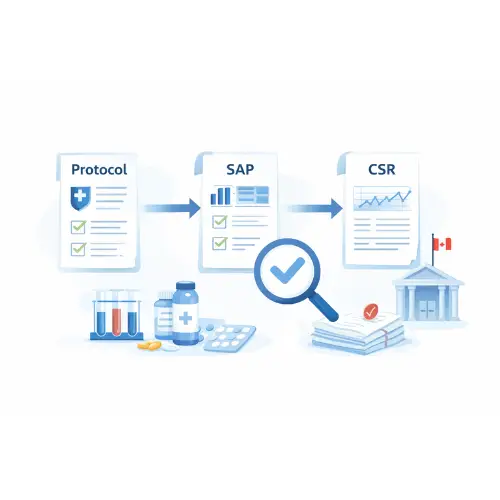
- Clinical protocols
- Investigator brochures
- Manufacturing documentation
- Regulatory summaries
All documents must be scientifically accurate, internally consistent, and clearly written. Medical writers play a key role in organizing and communicating this information effectively. Clear documentation allows regulators to review complex scientific data efficiently.
Quality Control and Submission Readiness
Before submitting an IND application, sponsors should conduct thorough quality control reviews.
Key steps include:
- Verifying consistency across documents
- Confirming that all required sections are complete
- Ensuring that supporting data are properly referenced
Many companies conduct internal regulatory readiness assessments to identify potential issues before submission. These reviews help minimize the risk of regulatory questions or clinical holds.
Common Challenges in IND Submissions
Biotech startups frequently encounter challenges during the IND preparation process.
Common issues include:
- Insufficient toxicology data
- Manufacturing readiness delays
- Unclear clinical development plans
- Inconsistent documentation
Early regulatory planning can help address these challenges before they impact submission timelines. Working with experienced regulatory professionals can significantly improve the efficiency of the IND process.
After the IND Submission
Once the IND application is submitted, the FDA begins a 30-day safety review. During this period, regulators assess whether the proposed clinical trial can proceed safely.
Possible outcomes include:
- The study may proceed without comments
- The FDA may request additional information
- The study may be placed on clinical hold
If the FDA identifies concerns, sponsors must address them before initiating the trial. However, well-prepared IND submissions often proceed smoothly.
Strategic Value of a Successful IND
Clearing the IND milestone opens the door to clinical development. For startups, this achievement demonstrates that the therapy has progressed beyond preclinical research and entered the stage of human testing. This milestone often increases investor confidence and can significantly enhance company valuation. Successful IND clearance also signals that the development program meets regulatory expectations and is positioned for further clinical advancement.
Conclusion
The IND submission is one of the most important steps in the drug development process. For biotech startups, it represents the transition from scientific discovery to clinical validation. Preparing a successful IND requires careful coordination of nonclinical data, manufacturing controls, clinical trial design, and regulatory documentation.
Companies that approach this milestone strategically—by planning early, engaging regulators proactively, and maintaining strong scientific communication—greatly increase their chances of a successful review. Ultimately, the IND submission is more than a regulatory requirement. It is the foundation upon which the entire clinical development program is built.